Author Archives: admin

XML for the Long Haul

There will be a one-day symposium on the theme XML for the Long Haul, right before the Balisage conference in Montréal this year. I’ve thought about this, lately.

First of all, isn’t this what XML is about? The ability for information to survive a proprietary method of conserving it? The means to make it happen, regardless of what happens to your software? I’ve preached about this for a long time for my customers, listeners, and those who just couldn’t get away. If a disaster happened to your software, if it was somehow wiped out in spite of your best efforts, my point was that it would only take a few days to build something that would parse most of the information in an XML file. Maybe another few days to produce output from it, but provided that you spoke the written language and the structure was done by someone who had at least a basic idea of what XML (and SGML; this isn’t new) was about, it wouldn’t take more than a few days at most to see what that lost information was about.

Second, my points re the first, above, pretty much summarise my views here, but I really mean it: This is what XML is about.

But is it really that simple? Is markup really that descriptive? Well, not always. There’s plenty of markup out there that is obscure and hard to read. For example, is a namespace going to make your leftover instances easier to read? Are your element type names descriptive? What about your attributes? Do you include comments or annotations with your schema? Do you include wrappers that contain groups of element types in a semantically meaningful way? Does your group include everything required for that group to be complete? Have a look at one of your instances with fresh eyes, see if it makes sense. Does one type of information relate to another? How would you format this lost instance, if you had just come across it? If it had been a thousand years and you could understand the language but not the culture, would you understand the meaning of the information? Could you print it and explain what went on then?

Don’t laugh. Pretend that you really are viewing your structures from the outside. Pretend that you don’t have the schema at hand. Pretend that you don’t know the semantics, even though you can understand the contents. Pretend that you really are studying the information as an outsider. Does it all make sense?

I think this is a worthwhile reality check. I think that we all should ask this of the schemas we create, every time we do an information analysis. Are our schemas understandable? Are they legible?

I would really like to be in Montréal in August this year. I think it’s important.

Back from XML Prague

I’m back home from XML Prague. It’s been a fabulous weekend with many interesting talks and lots of good ideas, and I’m still trying to sort my impressions. So many things I want to try, so many technologies I want to learn. The feedback from my talk on Film Markup Language alone is enough to keep me busy for a few weeks.

More later, but for now, suffice to say that I’m already thinking of a subject for a presentation next year.

It’s Quite Possible to Lose Your Way in Prague

I drove to Prague for XML Prague, yesterday. I left Göteborg on Wednesday evening, taking the ferry to Kiel, and then spent most of Thursday on the Autobahn. It all went without a hitch; not that I’m that good but my GPS is. I would probably have ended up in Poland without it because I often miss the road signs when on my own. Some of my business trips before the GPS era were truly memorable.

So today I took a walk around central Prague, shopping gifts and seeing the sights. And a wonderful city it is, one of my favourite cities in Europe. All that history, all that architecture, the bridges… and small, narrow streets that are never straight. They are practically organic (and probably feed from the gift shops since they are everywhere), and it’s very difficult to find your way. It’s a labyrinth we are talking about.

Yes, I lost my way. The third time I came back to that innocent-looking Kodak shop (and there are a lot of shops with Kodak signs in central Prague, I might add), I knew I was in trouble. I was walking in circles, my feet aching while a particularly wet mixture of snow and rain poured down, and had no idea where I was. And I kept thinking about my GPS, safely tucked away back in my hotel room, remembering that I actually considered bringing it along for the walk but then shrugging, thinking “how hard can it be?”

I found a shelter in a mall I hadn’t seen before (well, I think I hadn’t seen it before) and considered my next move while high-heeled ladies tried lipsticks and wondered what the out-of-place stranger was doing in the cosmetics department. I could ask someone, I suppose, some friendly local…

Then I remembered: I have a GPS in my mobile. It took a few minutes for it to find the satellites it required but after that, I only had to walk for a few more minutes to find a familiar landmark. In a counter-intuitive direction, I might add.

The wisdom in this story? Thank goodness for GPS devices. Oh, and XML Prague starts tomorrow morning.

Automating Cinemas at XML Prague

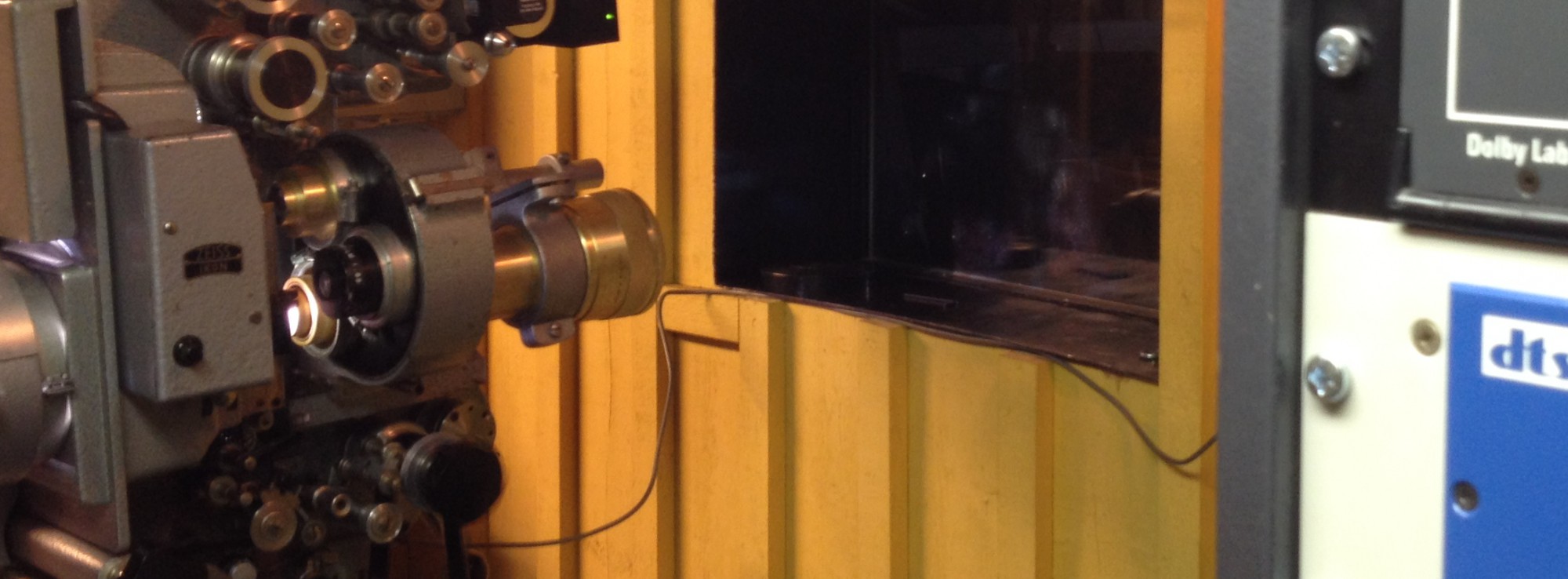
I’ve been busy writing my presentation and some example XML documents for my presentation on Automating Cinemas Using XML at XML Prague in about a week and a half. I’m slightly biased, I know, but I think the presentation actually does make a good case for XML-based automation of cinemas. I know how primitive today’s automation is, in spite of the many technological advances, and I know where to improve it. The question I’m pondering right now is how to explain the key points to a bunch of XML people who’ve probably never seen a projection booth, and do it in twenty minutes.

The opposite holds true, of course, if I ever want to sell my ideas to theatre owners. They know enough about the technology (I hope) but how on earth will I be able to explain what XML is?

There’s still have stuff to do (for one, it would be nice to finish the XSLT conversions required and be able to demonstrate those, live, at the conference) but the presentation itself is practically finished and the DTD and example documents are coming along nicely. I suppose I need to update the whitepaper accordingly and publish it here, when I’m done.

See you at XML Prague!

Developing SGML DTDs: From Text To Model To Markup

Quite by accident, I discovered that Eve Maler and Jeanne El Andaloussi’s Developing SGML DTDs: From Text To Model To Markup is available online. I’m one of the people lucky enough to own a hard copy, but if you aren’t as fortunate, read it at http://www.xmlgrrl.com/publications/DSDTD/. It’s one of the best books ever written about information analysis, that (far too) little used skill required to write a good DTD. In my ever-so humble opinion, the book should be mandatory for anyone involved in a markup-related project of any kind, that’s how good it is.

(Yes, I know it was written before XML came out, 12 years ago, but XML is SGML, really, and the book remains as useful today as it was when it came out in 1995.S

Tiny URLs

I don’t like them. Tiny URLs, that is. Those short things that look like web addresses (they are!) but give no clue to what their targets are. They have become commonplace enough now, though, and it’s time to react.

I really don’t like them.

Here’s why: They look just like those little URLs that used to be well hidden in seemingly legitimate spam emails. Every time I see them, my first thought is spam. If I follow that link, someone will exploit a weakness in my browser to gain control over my machine or empty my credit card, somehow. And yes, I know, it won’t really happen but I’ve lived with spam for a long time and I don’t trust anything that cannot be deciphered simply by looking at it. I’m a bit silly in that respect. Yes, I realise there are benefits with using short URLs when tweeting, when your available space in counted in characters, but that’s another instinctive dislike of mine: What’s the point of messages forced to be short in such an arbitrary manner?

Yes, I use Twitter myself (mostly to keep track of stuff such as my favourite XML conference, XML Prague) and I fully understand the need of short URLs in tweets. You don’t really want to waste the available space with a URL, if at all possible. It’s a neat way of solving a problem, but a problem that is extremely artificial to begin with, to make room for other characters in an arbitrarily limited message.

But above all, I don’t trust tiny URLs because I can’t see what they are about. They are just characters preceded by “http://” and they look every bit as sneaky as that link you just know will break your machine.

Festival Impressions

The Göteborg Film Festival is over and life is slowly returning to normal. As usual I’ve worked at the festival as a projectionist (my 21st consecutive year at the Draken Cinema), screening films day and night, and the first few days after each festival are always a blur. First of all, I’ve had way too little sleep so my brain is not working at full speed. Second, the festival itself imposes a mental and physical routine that takes a few days to break. A day at the festival is divided into shows starting at certain times so everything I do is based on these fixed points in time; when I eat, when I have coffee, when I do anything but the screening itself.

And I’m not there yet. The last show was at 9 p.m. last night and mentally I’m still in the projection booth. I have still to say more than “hi” to my family, and I have no idea of what’s been going on in the outside world, other than what I’ve learned through the Internet.

I expect the same to be true for many of my colleagues and probably quite a few festival visitors. The difference between me and most of them is that I don’t watch films, I just screen them. The vast majority of the others visit and work at the festival because they love watching films. They see several of those every day, for 11 straight days, and then discuss them between themselves, finding new angles, new interpretations.

And sometimes they ask me about the films. Did I see anything good? Was the festival a success? Was this or that actor in film xyz? Etc. And I always tell them that I have no idea, that I didn’t see a single film, that I don’t care about what I show, just that it’s shown as well as possible. I’m not there for the films, I’m there for the projection. It’s a film projection marathon and I like the challenge. And every time, they are mystified. They look at me in disbelief, wondering why, wondering how I can spend 11 days in a dark projection booth, screening 60 shows without being interested in what I show.

It’s the work itself, people. It’s the technology, the projectors and the sound systems, but it’s also the art, the show itself, with curtains and lights and magic; and it’s the craftsmanship, inspecting film prints and handling the various requirements that together result in a successful show.

I explain this to people and they nod as if finally understanding… until the next time around, the next year and the next festival.

So yes, there might have been a few good films this year but I don’t know that, and I really don’t care. Was the festival successful? Yes, my screenings went well, all of them.

See you next year.

Indexing Functionality in FOP

Anyone reading this who happens to be involved in the development of FOP, Apache’s open source XSL-FO engine? If I ask you really nicely and politely, would you please consider implementing XSL-FO 1.1 index handling?

Alternatively, can you recommend a FO engine that is capable of index handling but costs less than RenderX’s XEP or Antenna House’s XSL Formatter?